
The Perception of Ambiguous Figures in the First Wittgenstein's Philosophy

Article Sidebar
Main Article Content
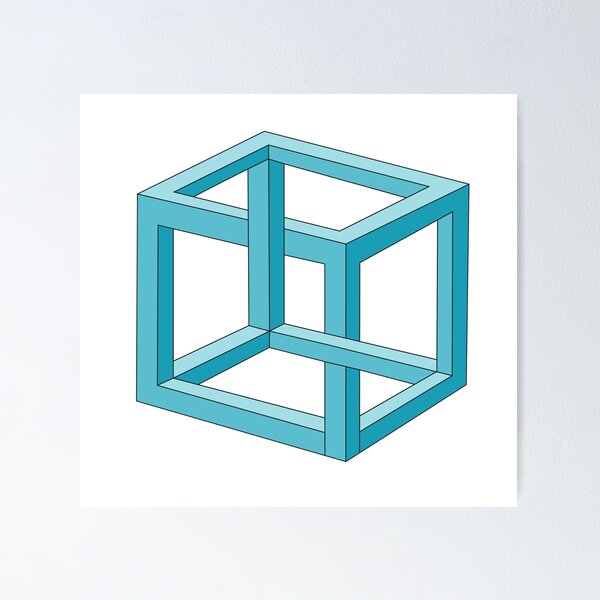
The present paper analyzes Ludwig Wittgenstein’s first considerations regarding the perception of ambiguous figures, which is later encompassed in the broader notion of “aspect perception.” The aim is to highlight some of the considerations of the Tractatus Logico-Philosophicus regarding the intrinsically representational character of perception in the case of the Necker Cube, to establish in what way and to what extent its first critical observations of the perception of properties that admit degrees in Some Remarks on Logical Form, in 1929, may similarly impact upon his description of this particular class of experiences under consideration.
- Ambiguous figures
- Visual perception
- Pictorical theory
- Logical independence
- Aspect perception
Anscombe, E. (1965). An Introduction to Wittgenstein’s Tractatus (Second Edition, Revised). Harper & Row.
Austin, J. (1980). Wittgenstein’s Solutions to the Color Exclusion Problem. Philosophy and Phenomenological Research, 41(1/2), 142-149. https://doi.org/10.2307/2107396 DOI: https://doi.org/10.2307/2107396
Candlish, S. (1996). The Unity of the Proposition and Russell’s Theories of Judgement. En R. Monk y A. Palmer (Eds.), Bertrand Russell and the Origins of Analytical Philosophy (pp. 103-136). Thoemmes.
Glock, H-J. (1996). A Wittgenstein Dictionary. Wiley-Blackwell. DOI: https://doi.org/10.1111/b.9780631185376.1996.00019.x
Hacker, P. (1999). Naming, Thinking and Meaning in the Tractatus. Philosophical Investigations, 22(2), 119-135. https://doi.org/10.1111/1467-9205.00090 DOI: https://doi.org/10.1111/1467-9205.00090
Jaramillo, J. (2023). Reconstrucción teórico-conjuntista de la Teoría Pictórica del Tractatus de Wittgenstein. Praxis Filosófica, (56), 247-272. https://doi.org/10.25100/pfilosofica.v0i56.12857 DOI: https://doi.org/10.25100/pfilosofica.v0i56.12857
Kenny, A. (1973). Wittgenstein. Alianza Editorial.
Malcolm, N. (1977). Memory and Mind. Cornell University Press.
Russell, B. (1984). Theory of Knowledge: The 1913 Manuscript. Routledge.
Ter Hark, M. (2015). Aspect perception in the Tractatus and the Philosophical Investigations. En M. Campbell y M. O’Sullivan (Eds.), Wittgenstein and Perception (pp. 165-181). Routledge. https://doi.org/10.4324/9781315728476 DOI: https://doi.org/10.4324/9781315728476
Winch, P. (1987). Trying to Make Sense. Blackwell.
Wittgenstein, L. (1929). Some Remarks on Logical Form. Aristotelian Society, Supplementary Volume, 9(1), 162-171. https://doi.org/10.1093/aristoteliansupp/9.1.162 DOI: https://doi.org/10.1093/aristoteliansupp/9.1.162
Wittgenstein, L. [T] (1961). Tractatus Logico-Philosophicus (D. Pears y B. McGuinness, Trads.), Routledge.
Wittgenstein, L. (1980a). Remarks on the Philosophy of Psychology. Vol. 1 (1946-1947) (G. E. M Anscombe, H. Nyman y G. H. von Wright, Eds.). Basil Blackwell.
Wittgenstein, L. (1980b). Remarks on the Philosophy of Psychology. Vol. 2 (1946-1947) (G.E.M Anscombe y G. H. von Wright, Eds.). Basil Blackwell.
Wittgenstein, L. (1981). Remarks on the Foundations of Mathematics (G. H. von Wright, R. Rhees y G. E. M. Anscombe, Eds.). Blackwell.
Wittgenstein, L. (1982). Last Writings on the Philosophy of Psychology. Vol. I (1948-1949) (C. G. Luckhardt, G. H. von Wright y H. Nyman Eds.). University of Chicago Press.
Wittgenstein, L. (1993a). Los cuadernos azul y marrón (F. García Guillén, Trad.). Tecnos.
Wittgenstein, L. (1993b). Philosophical Grammar (R. Rhees, Ed.). Basil Blackwell.
Wittgenstein, L. (1998). Notebooks 1914-1916 (G.E.M Anscombe y G. H. von Wright, Eds.). Basil Blackwell.
Wittgenstein, L. [PI] (2001). Philosophical Investigations (G. E. M. Anscombe, Trad.). Basil Blackwell.
Wittgenstein, L. (2009). Wittgenstein II: Diario Filosófico (1914-1916) (J. Muñoz Veiga, Trad.). Gredos.
Wittgenstein, L. (2010). Wittgenstein I: Investigaciones Filosóficas (A. García Suárez y C. Moulines, Trads.). Gredos.
Wittgenstein, L. (2013). The Big Typescript: TS 213 (German-English Scholar’s Edition) (G. Luckhardt y M. E. Ave, Eds.). Wiley-Blackwell.
Wittgenstein, L., Ambrose, A. y Macdonald, M. (1979). Wittgenstein’s Lectures, Cambridge 1932-1935. Basil Blackwell.
Yuan, M. S. (2022). Sobre la noción de ‘interpretación’ en el ‘ver cómo’ de Wittgenstein. Ideas y Valores, 71(179), 161-180. https://doi.org/10.15446/ideasyvalores.v71n179.102685 DOI: https://doi.org/10.15446/ideasyvalores.v71n179.102685
Downloads





This work is licensed under a Creative Commons Attribution-NonCommercial-ShareAlike 4.0 International License.
De acuerdo con nuestra política (Licencia Creative Commons CC BY-NC-SA 4.0) los artículos presentados y sometidos al proceso editorial en la revista Praxis Filosófica no tienen costo alguno para sus autores ni retribuciones económicas para la revista. El artículo de carácter inédito, producto de investigación o de algún proyecto que se presente a Praxis Filosófica, no podrá estar sometido a otro proceso de publicación durante el proceso que se lleve en nuestra revista.