
Coquetería política. Isabel I en La historia de Inglaterra de David Hume

Palabras clave:
Isabel I, Feminidad, Género, Política, Coquetería, HumeBarra lateral del artículo
Aceptado 2025-03-26
Publicado 2025-06-05
Contenido principal del artículo
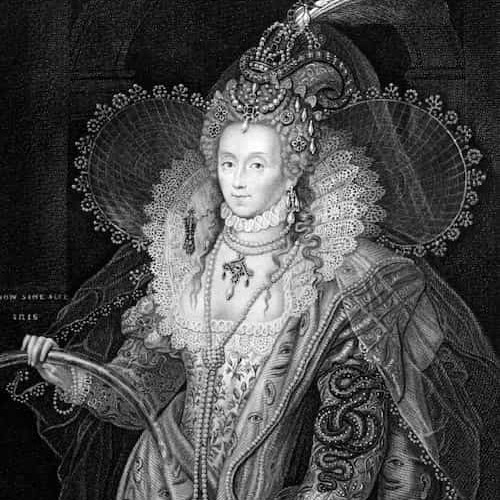
El artículo examina la imagen de lo femenino que arroja la figura de Isabel I en La historia de Inglaterra a la luz del contraste con otras figuras femeninas que la anteceden en la obra, bajo el principio metodológico de que una lectura en contraste con anteriores hitos femeninos en la narración histórica de Hume puede iluminar la naturaleza del género en el carácter regio de Isabel I. En primer lugar, identificamos las distintas vías por la cuales Hume se aproxima a la figura política y al carácter personal de Isabel: (a) su discurso político, (b) los atributos de su persona, (c) las cualidades de su carácter y (d) su sensibilidad política. Luego, empleamos el paralelismo planteado en el volumen IV entre Isabel y María I de Escocia para interpretar las apreciaciones de Hume en clave genderizada y para iluminar la naturaleza política de la coquetería.
Baier, A. (1989). Hume on Women’s Complexion. En P. Jones (Ed.), The Science of Man in the Scottish Enlightenment (pp. 33-53). Edinburgh University Press.
Costelloe, T. M. (2012). Hume on History. En A. Bailey, y D. O’Brien (eds.), The Continuum Companion to Hume (pp. 364-376). Continuum.
Elizabeth I. (2000). Collected Works (L.S. Marcus, J. Mueller y M. B. Rose, Eds.). The University of Chicago Press.
Green, K. (2011). Will the Real Enlightenment Historian Please Stand Up? Catharine Macaulay versus David Hume. En C. Taylor y S. Buckle (Eds), Hume and the Enlightenment (pp. 39-51). Pickering y Chatto.
Guimarães, L. (2004). The Gallant and the Philosopher. Hume Studies, 30(1), 127-147. https://doi.org/10.1353/hms.2011.0218 DOI: https://doi.org/10.1353/hms.2011.0218
Hume, D. [HL]. (1969). The Letters of David Hume (J. Y. T. Grieg, Ed.) (2 vols.). Oxford.
Hume, D. [HE]. (1983[1754-1762]). The History of England from the Invasion of Julius Caesar to the Revolution in 1688 (W. B. Todd, Ed.) (6 vols). Liberty Fund.
Hume, D. [E-OSH]. (1987[1741-1776]). Essays Moral, Political, Literary (E. F. Miller, Ed.). Liberty Fund.
Hume, D. [EPM]. (1998[1751]). An Enquiry Concerning the Principles of Morals (T. L. Beauchamp, Ed.). Oxford University Press. DOI: https://doi.org/10.1515/9780691213118-004
Hume, D. (2011). Ensayos morales, políticos y literarios (C. M. Ramírez, Trad.). Trotta.
Maquiavelo, N. (1980). El Príncipe (A. Cardona, Trad.). Bruguera.
Phillipson, N. (2011). David Hume: The Philosopher as Historian. Yale University Press.
Robinson, W. (2013). Hume the Moral Historian: Queen Elizabeth I. The European Legacy. Towards New Paradigms, 18(5), 576-587. https://doi.org/10.1080/10848770.2013.804731 DOI: https://doi.org/10.1080/10848770.2013.804731
Temple, K. (2000). “Manly Composition”: Hume and the History of England. En A. Jaap Jacobson (Ed.), Feminists Interpretations of David Hume (pp. 263-282). Pennsylvania State University Press.
Wootton, D. (2009). David Hume: “The Historian”. En D. F. Norton, y J. Taylor (Eds.), The Cambridge Companion to Hume (pp. 447-479). Cambridge University Press. https://doi.org/10.1017/CCOL9780521859868.014 DOI: https://doi.org/10.1017/CCOL9780521859868.014
Downloads

Esta obra está bajo una licencia internacional Creative Commons Atribución-NoComercial-CompartirIgual 4.0.
De acuerdo con nuestra política (Licencia Creative Commons CC BY-NC-SA 4.0) los artículos presentados y sometidos al proceso editorial en la revista Praxis Filosófica no tienen costo alguno para sus autores ni retribuciones económicas para la revista. El artículo de carácter inédito, producto de investigación o de algún proyecto que se presente a Praxis Filosófica, no podrá estar sometido a otro proceso de publicación durante el proceso que se lleve en nuestra revista.